

Can You Lay Sod in October in Dallas? A Fall Lawn Guide
NORTH TEXAS LAWN CARE & SOD INSTALLATION GUIDE
October can be a great time to install sod in North Texas.
After months of intense summer heat, the cooler days make yard work easier and put less stress on newly installed grass. The soil is also usually still warm enough for roots to become established before winter.
So if you're in Dallas, Plano, Richardson, Fort Worth, or anywhere else in the DFW area and wondering whether you've waited too long to install sod, the answer is usually no.
In fact, early to mid-October can be one of the better times of year to get a new lawn started.
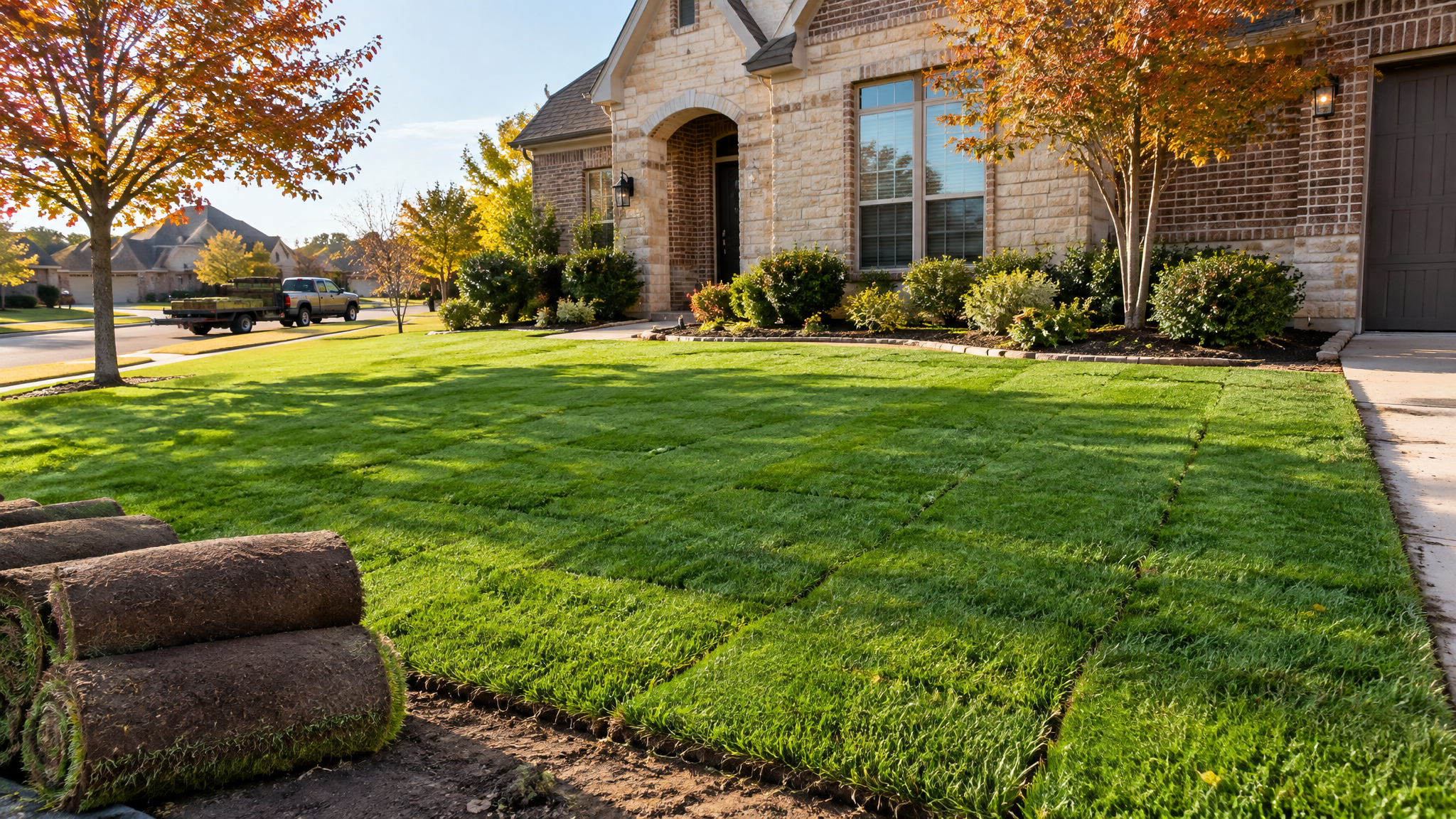
Fresh sod installed on a Dallas-Fort Worth lawn in October. Cooler air temperatures and warm soil can give new grass a good opportunity to establish roots before winter.
Can You Lay Sod in October in Dallas?
Yes.
Bermuda, St. Augustine, and Zoysia sod can all be installed during October in North Texas. The biggest advantage is that you're no longer dealing with the extreme heat and rapid drying that comes with a July or August installation.
Even though daytime temperatures begin cooling down, the soil underneath your lawn stays warm much longer. That gives new sod time to begin rooting into the existing soil.
The earlier in October you install, the more time the grass has to establish before colder weather arrives.
Warm Soil Matters More Than Hot Weather
New sod doesn't need 95-degree weather to grow roots. During October, DFW may see comfortable daytime temperatures in the 70s and 80s while the soil remains warm from the summer months. That's a good combination for sod.
The grass may not grow as quickly above ground as it does during the summer, but root development can continue underneath the surface.
And because the weather is cooler, the sod doesn't lose moisture nearly as quickly.
What About the First Freeze?
North Texas normally doesn't see its first freeze until later in the fall, although the exact timing changes from year to year.
That means sod installed in early or mid-October will often have several weeks to begin establishing roots before freezing temperatures arrive.
You don't need the lawn to be completely established before winter. You simply want to give the roots as much time as possible to begin attaching to the soil underneath.
Why October Can Be Easier Than Installing Sod in Summer
Most people think spring and summer are automatically the best times to install sod.
They can be good planting seasons, but North Texas summers create their own problems.
Significantly Lower Water Requirements: Fresh sod dries quickly during July and August, especially when temperatures approach or exceed 100°F.
October weather is much more forgiving.
You'll still need to keep new sod consistently moist, but cooler temperatures and shorter days usually mean less water is lost through evaporation.
That can make it easier to keep the lawn properly hydrated without constantly running your irrigation system.
Less Heat Stress: Many aggressive summer weeds begin slowing down as temperatures cool.
That doesn't mean weeds completely disappear, but new sod installed in the fall may face less competition from fast-growing summer weeds than it would earlier in the season.
Fewer Summer Weeds: Summer annual weeds like crabgrass, spurge, and nutsedge are winding down their lifecycles by October. Newly laid sod does not have to aggressively compete with opportunistic weed seeds for moisture and nutrients.
A Head Start for Spring: One of the biggest advantages of fall installation is what happens the following spring.
Sod that begins establishing roots in the fall is already in place when temperatures warm up again.
Instead of starting from bare soil in April, you already have a lawn that can begin coming out of dormancy and filling in.
How Different Sod Types Handle October Installation
We supply several warm-season grasses commonly used throughout North Texas. Each one handles cooler weather a little differently.
Grass Variety | October Rooting Speed | Cold / Frost Sensitivity | Recommended October Timing |
Rapid (14–21 Days under mild soil temps) | Extremely hardy; turns tan/dormant after first frost but roots survive deep. | Ideal Oct 1–25. Can be laid dormant through Nov if kept hydrated. | |
Moderate (18–28 Days) | Moderate. Raleigh has the best cold tolerance of St. Augustines, but unrooted stolons are sensitive to hard freezes. | Best Oct 1–20. Allows stolons 3–4 weeks to knit before frost. | |
Moderate to Deliberate (21–30 Days) | Excellent cold tolerance once rooted; retains green color longer into fall than Bermuda. | Best Oct 1–15 for optimal rooting before November chill. |
How to Install Sod in October
Good sod can still fail if the ground isn't prepared correctly. Fall installation isn't complicated, but a few steps make a big difference.
STEP 01 — Prepare the Soil
Remove dead grass, weeds, rocks, and debris before laying sod.
North Texas clay can become extremely compacted after a hot, dry summer, so loosening the top few inches of soil can help new roots get established.
If needed, add a thin layer of quality topsoil or compost to improve the planting surface.
This is also the time to correct low spots and make sure water drains away from your home's foundation.
STEP 02 — Install the Sod as Soon as Possible
Fresh sod should not sit on the pallet longer than necessary.
Once it arrives, begin laying it as soon as you can.
Place the pieces tightly together without overlapping them and stagger the seams similar to brickwork.
After installation, rolling the sod can help improve contact between the new turf and the soil underneath.
STEP 03 — Keep New Sod Moist
The first few weeks are the most important.
During the first week, keep the sod and soil underneath consistently moist without creating standing water.
As the roots begin to take hold, gradually reduce how often you water while watering more
STEP 04 — Don't Forget About Water During Winter
Warm-season grasses such as Bermuda, St. Augustine, and Zoysia may go dormant during winter, but the roots are still alive.
Dormant grass can still dry out.
If North Texas goes through an extended stretch of dry winter weather, the lawn may need occasional watering.
You don't need to keep it soaked. The goal is simply to prevent the soil and root zone from becoming excessively dry.
One Common Fall Sod Mistake: Too Much Fertilizer
WARNING: DO NOT APPLY HIGH-NITROGEN FERTILIZER
It's tempting to fertilize new sod heavily because you want it to turn green quickly.
In October, that isn't always a good idea.
Heavy applications of quick-release nitrogen can encourage soft new top growth right before colder weather arrives.
For many lawns, it's better to focus on good soil contact, proper watering, and root establishment.
If you're unsure whether your new sod needs fertilizer, a soil test is a much better starting point than guessing.
Be Careful With Weed Killers
Avoid applying strong pre-emergent or post-emergent herbicides to newly installed sod unless the product specifically says it is safe for new turf.
Fresh sod needs time to establish before being exposed to many lawn chemicals.
When in doubt, allow the grass to root first and deal with weeds later.
Is October Too Late for Sod in DFW?
Usually, no.
Early and mid-October can be an excellent time to install sod in North Texas because you get the benefit of warm soil without the extreme summer heat.
The biggest factor is timing.
The sooner the sod is installed, prepared correctly, and kept properly watered, the better chance it has to begin establishing before winter.
Need Sod in the Dallas-Fort Worth Area?
NTX Sod Supply LLC provides fresh Bermuda, St. Augustine, and Zoysia sod for homeowners, landscapers, contractors, and commercial properties throughout the DFW Metroplex.
Whether you're repairing part of a yard or replacing the entire lawn, we can help you choose the right grass and arrange pickup or delivery.
📍 Yard Address: 915 N Bowser Rd, Richardson, TX 75081 | 📞 Call / Text: (972) 829-5085


Comments